Liposuction Michigan Explained: Procedure, Recovery, and Results
Liposuction is one of the most requested body contouring procedures in Michigan, and for good reason. It can refine areas that stay stubborn despite disciplined eating habits, regular training, and major weight loss. It is also one of the most misunderstood procedures in aesthetic surgery. Many people still think of it as a weight-loss shortcut, when in practice it works best as a shaping tool for patients who are already fairly close to a stable, healthy weight.
For anyone researching Liposuction Michigan options, clarity matters. The questions that come up in consultation are usually practical rather than abstract. How much fat can realistically be removed? How painful is recovery? When can you drive, work out, or fit back into normal clothes? Will the result look natural, or will it be obvious that you had surgery? Those are the questions that deserve honest answers.
The procedure itself has changed over the years. Modern liposuction is more precise and generally easier to recover from than older versions, but it is still surgery. It requires planning, patience, and a clear understanding of what it can and cannot do. The best outcomes usually come from matching the right patient to the right technique, treating the correct areas, and being conservative enough to preserve smooth contours.
What liposuction actually does
Liposuction removes localized fat deposits through small incisions using a thin tube called a cannula. The goal is not simply to make an area smaller. The goal is to reshape the contour so the body looks more balanced from multiple angles, standing still and in motion.
In real practice, that distinction matters a great deal. A patient may come in focused on lower abdominal fullness, but the issue may also involve the flanks, upper abdomen, and waist transition. If only one zone is treated aggressively while neighboring areas are ignored, the body can look unfinished or uneven. Good liposuction is partly technical and partly artistic. It depends on understanding how neighboring areas relate to one another.
It also helps to understand what liposuction does not fix well. It does not meaningfully tighten significant loose skin. It does not treat stretch marks. It does not strengthen separated abdominal muscles after pregnancy. It does not replace the metabolic benefits of exercise or dietary change. Someone with a heavy lower abdomen caused mostly by lax skin and weakened abdominal wall may be much better served by a tummy tuck than by liposuction alone. That is a common point of confusion, especially among patients hoping to avoid a larger operation.
Common treatment areas in Michigan practices
The areas most often treated tend to be the abdomen, flanks, hips, thighs, upper arms, back, and under the chin. Men often request liposuction of the abdomen and flanks, sometimes the chest area as part of treatment for excess fullness. Women commonly ask about the waist, bra line, inner and outer thighs, lower abdomen, and arms. Smaller areas such as the submental region under the chin can produce a surprisingly visible improvement because the neck and jawline affect how the entire face reads.
In Michigan, body contouring consultations often have a seasonal rhythm. Many patients schedule surgery in cooler months because compression garments are easier to tolerate under looser clothing, and there is less pressure to be pool-ready in the immediate weeks after surgery. That does not mean winter is universally better. Snow, ice, and long drives can complicate early follow-up visits, especially if someone lives outside a metro area and needs a caregiver to help with transportation. Timing should fit your recovery window, not just the calendar.
Who tends to be a good candidate
The strongest candidates are people at a relatively stable weight who have specific pockets of fat that do not respond the way the rest of the body does. They usually have reasonably good skin elasticity and realistic expectations. They are looking for refinement, not reinvention.
Weight stability deserves emphasis. If someone plans to lose another 30 or 40 pounds, it often makes sense to do that first. Body shape changes with significant weight loss, and operating too early can leave a patient paying for contouring based on a body that is still in transition. On the other hand, a person who has already lost substantial weight and plateaued may benefit from liposuction if the remaining issue is persistent fullness rather than loose skin alone.
Smoking status, overall health, and medication use matter as well. Nicotine raises the risk of wound healing problems and should be taken seriously. A history of blood clots, major heart or lung disease, or bleeding disorders changes the planning considerably. Even common supplements can affect bruising and bleeding. This is one reason a thorough preoperative review is not paperwork for its own sake. It directly affects safety.
The consultation: where good decisions start
A useful consultation is less about sales and more about judgment. An experienced surgeon will examine skin quality, fat distribution, body proportions, prior scars, and areas of asymmetry that the patient may not have noticed. They should also ask about daily routine, exercise habits, travel time to the office, and whether help is available at home for the first day or two.
This is often when expectations become more grounded. A patient may point to a photo taken ten years and two pregnancies ago and ask to look exactly the same. That is not a realistic framework. The body changes with age, hormones, weight fluctuation, and skin elasticity. A better conversation centers on what can be improved safely now, with the tissues and anatomy you actually have.
Michigan patients also sometimes underestimate the impact of travel. If your surgeon is in Detroit, Grand Rapids, Ann Arbor, Troy, or another major center, and you live one to three hours away, postoperative logistics matter. Long car rides immediately after surgery can be uncomfortable. Winter weather can turn a routine follow-up into a stressful trip. These details should be addressed before scheduling.
How the procedure is performed
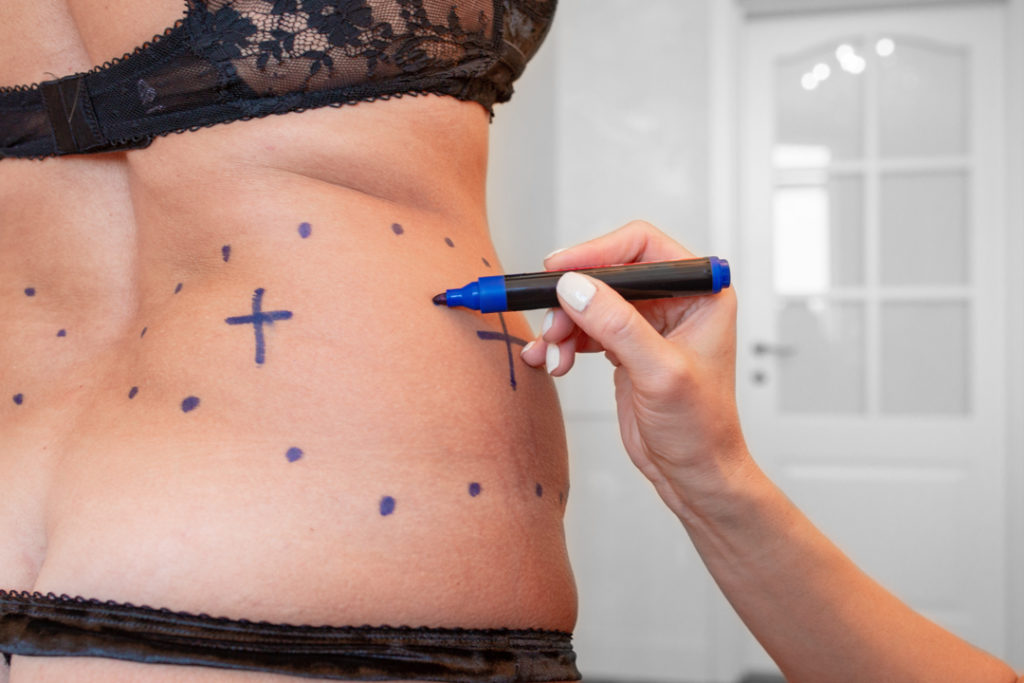
Most liposuction procedures begin with markings on the skin while the patient is standing. This step is more important than many people realize because body contours shift when lying down. The surgeon maps where fullness sits, where shadows naturally fall, and where transitions need to remain smooth.
After anesthesia is started, a fluid solution is infused into the treatment area. This usually contains saline and medications that help reduce bleeding and improve comfort. Small incisions are then made in discreet locations, and the cannula is passed through the fat layer to loosen and remove fat in a controlled pattern.
The exact technique varies. Traditional suction-assisted liposuction remains widely used and effective. Some surgeons may use power-assisted devices that make fat removal more efficient in dense or fibrous areas. Others may incorporate ultrasound or laser-based technologies in selected cases. What matters most is not the branding of a device but the surgeon’s judgment, experience, and consistency of results. A well-executed standard technique in skilled hands will usually outperform a heavily marketed technology used without nuance.
Procedure length depends on the number of areas treated and the volume removed. A small chin case may take less than an hour. A combined abdomen, flanks, and back contouring case can take several hours. Larger combined cases are not automatically better. There is a point where trying to do too much at once can increase swelling, drainage, fatigue, and overall recovery burden.
Anesthesia and surgical setting
Liposuction may be performed under local anesthesia with sedation or under general anesthesia, depending on the extent of treatment and the practice setting. Small, limited areas can sometimes be done with the patient awake but comfortable. More extensive contouring is commonly done under general anesthesia for safety, efficiency, and patient comfort.
The quality of the facility matters. Whether the procedure takes place in an accredited office-based surgical suite or an ambulatory surgery center, the environment should be equipped for monitoring and emergency preparedness. This is one of those details patients sometimes overlook while focusing on before-and-after photos. It should not be an afterthought.
What recovery usually feels like
Most people describe the first several days as more sore and stiff than sharply painful. The sensation is often compared to a very intense workout or a deep bruise over a broad area. Getting in and out of Liposuction Michigan bed, standing fully upright, and shifting positions can feel awkward at first, especially after abdominal or flank treatment.
Swelling starts early and can be significant. Bruising varies widely. Some patients bruise dramatically, others very little. Temporary drainage from the tiny incision sites is also common in the first day or two because some of the infiltrated fluid exits after surgery. Compression garments are typically worn to help manage swelling and support the new contour as tissues settle.
Returning to work depends on the nature of the job and the extent of the procedure. A person with a desk job after limited liposuction may feel ready within several days. Someone whose work is physically demanding may need more time. If multiple areas were treated, or if the patient tends to swell a lot, one week can feel optimistic. Two weeks often gives a more comfortable margin for many body cases.
Michigan weather can influence comfort more than people expect. Recovery during a humid summer can make compression garments feel oppressive. Recovery during a freezing winter can add extra stiffness when moving around, especially for people who are already tense from soreness. Neither season is wrong, but each has its own annoyances.
The timeline patients should expect
One of the most common frustrations after liposuction is assuming the result will appear quickly. Early changes are visible, but they are blurred by swelling. The body has to reabsorb fluid, soften internal firmness, and adapt to the reshaped contour.
During the first two weeks, you are usually seeing a mixture of improvement and distortion. Clothes may fit differently, but the area can still look puffy or uneven from swelling alone. By about one to three months, the contour generally starts to look more coherent. Finer definition continues to emerge beyond that. In many cases, the result is still maturing at three to six months, and some areas, particularly if heavily treated or naturally fibrous, may take even longer to fully settle.
That timeline is worth respecting. Patients sometimes panic at week three because one side looks fuller, a small firm area appears, or the abdomen seems irregular in certain lighting. In many cases, these issues improve as swelling resolves and tissues soften. That does not mean every concern is normal, but it does mean early asymmetry is not unusual.
What the final result can realistically look like
Good liposuction results tend to look unforced. The waist appears cleaner, the abdomen flatter, the flank transition smoother, the thighs less crowded against each other, or the jawline more defined. Friends may say you look leaner or more rested without immediately knowing why. That is often the mark of tasteful contouring.
The amount of visible change depends on the starting point. Someone with a modest but sharply localized pocket of fat may see a dramatic difference from a relatively small volume removal. Someone with more generalized fullness may improve, but the result may be more subtle unless additional procedures are considered. This is where honest preoperative counseling matters. A patient can be thrilled by a refined silhouette if they expected refinement. The same patient may feel disappointed if they expected a completely different body shape.
Fat cells removed by liposuction do not simply grow back in the same way, but the remaining fat cells in the body can still enlarge with weight gain. That means long-term results are best preserved by maintaining a relatively stable weight. Liposuction can reset a contour. It cannot freeze the body in time.
Risks and trade-offs that deserve plain language
Every surgical procedure involves risk, and liposuction is no exception. The most common issues tend to be temporary and manageable, such as swelling, bruising, numbness, contour irregularity, or prolonged firmness in the treated areas. More serious complications are less common but can include infection, bleeding, fluid collections, blood clots, anesthesia-related problems, and uneven results that may require revision.
Contour irregularity is the risk patients worry about most, and reasonably so. Liposuction is performed under the skin, not on a flat tabletop. The thickness of the remaining fat layer matters. If too much is removed in one zone, the area can look hollow or stuck down. If too little is removed, the improvement may feel incomplete. If skin elasticity is limited, even technically sound fat removal can leave more looseness than the patient expected.
Revision surgery is sometimes possible, but it is often more difficult than primary liposuction because scar tissue changes how the tissue behaves. This is one reason choosing the right surgeon the first time matters more than chasing the lowest price.
Cost and what affects it
The price of liposuction in Michigan varies based on several factors: the number of areas treated, the complexity of the case, the type of anesthesia, the facility setting, and the surgeon’s experience. A limited small-area procedure is a different category from comprehensive trunk contouring, and the fee reflects that difference.
Patients should compare quotes carefully. One estimate may include surgeon fees, facility costs, anesthesia, garments, and routine follow-up care. Another may not. The least expensive number on paper is not always the least expensive experience once add-ons and possible revisions enter the picture. More importantly, cosmetic surgery is one of the worst places to shop purely by price. Value comes from safety, judgment, consistency, and aftercare.
Choosing a surgeon in Michigan
If you are researching Liposuction Michigan providers, look beyond social media clips and promotional language. Study the surgeon’s actual body contouring work. Pay attention to patients with a similar build, similar skin quality, and similar goals to your own. Look for smoothness, proportion, and restraint. Extreme before-and-after transformations can be eye-catching, but they are not always representative.
Board certification in plastic surgery matters. So does experience with the specific areas you want treated. The abdomen and flanks are different from arms, thighs, or revision cases. During consultation, the surgeon should be able to explain not just what they recommend, but why they recommend it, and why they might avoid doing more.
It is also worth noticing how the practice handles the unglamorous details. Are instructions clear? Are expectations realistic? Does the team discuss recovery with specificity, or only results? Can you reach someone if you have concerns after hours? Surgical quality includes the support around the operation, not just the operation itself.
When liposuction should be paired with something else
Liposuction works best when the main issue is excess fat. It becomes less effective as a stand-alone solution when the real problem is loose skin, muscle separation, or a structural issue that fat removal cannot address.
After pregnancy, for example, many patients have a mix of concerns: some excess fat, some stretched skin, and some widening of the abdominal muscles. In that setting, liposuction alone may slim the area but still leave a lower abdominal pouch because the skin and muscle support remain unchanged. Similarly, after major weight loss, skin redundancy often plays such a large role that excisional procedures become more important than suctioning fat.
That does not mean more surgery is always better. It means the treatment plan should fit the anatomy. A conservative, honest recommendation is usually the sign of a surgeon thinking long term.
The emotional side of recovery
This does not get discussed enough. Recovery after any cosmetic procedure has an emotional curve. There is often excitement before surgery, relief afterward, then a stretch where swelling, soreness, and temporary awkwardness make people question whether they made the right decision. This is especially common in the second week, when patience starts to wear thin but the final contour is still far from visible.
Knowing that this phase is normal can help. So can planning your recovery window realistically. If you expect to host guests, return to intense workouts in a few days, attend a big event looking camera-ready at two weeks, and hide the entire process from everyone around you, the experience will feel harder than it needs to. Recovery tends to go better when life is simplified for a short period.
A measured way to think about results
Liposuction is not magic, but it can be very effective when used for the right reasons and performed with care. The best candidates are not usually chasing a dramatic overhaul. They are trying to bring their shape into better alignment with the way they already live. Their clothes fit better. Their waistline reads cleaner. A small area that always bothered them stops dominating how they see themselves in the mirror.
That is the practical value of the procedure. For many Michigan patients, the result is not a new identity. It is a more proportional version of the body they already worked hard to maintain. When expectations are grounded, the plan is thoughtful, and the recovery is respected, liposuction can deliver exactly what it is meant to deliver: durable contour improvement that looks natural and feels worth the effort.
Aesthetic Plastic Surgery & Laser Center, Michelle Hardaway M.D.
27920 Orchard Lake Rd, Farmington Hills, MI 48334, United States
+1 248-221-1957
FAQ About Liposuction Michigan
Is 55 too old for liposuction?
Age 55 alone does not determine suitability. A surgeon evaluates overall health, skin quality, healing risks, and realistic goals. A personal consultation is needed to assess candidacy and discuss alternatives.
What happens 10 years after liposuction?
Contour improvements can last, especially with stable weight. Aging, pregnancy, and weight changes can alter the appearance over time. Results vary, and liposuction does not prevent future body changes.
Can lipo get rid of an apron belly?
Liposuction reduces localized fat but does not remove hanging excess skin. An apron belly may require assessment for a skin-removal procedure instead of, or alongside, fat removal. A qualified plastic surgeon can explain appropriate options and their risks.