What Happens at Your First Liposuction Michigan Appointment?

Walking into your first consultation for liposuction is usually a mix of curiosity, hope, and a fair amount of nerves. Most people have spent weeks, sometimes months, thinking about the decision before they ever pick up the phone. By the time they arrive, they often want two things at once: honest answers and reassurance that they are not wasting their time.
That first appointment matters more than many people expect. It is not just a sales conversation, and it should never feel like one. A good consultation is part medical evaluation, part planning session, and part reality check. If you are exploring Liposuction Michigan options, the first visit is where you begin to learn whether the procedure fits your body, your goals, and your tolerance for downtime, cost, and surgical risk.
Patients often come in with a very specific concern. It might be lower abdominal fullness that never changed after two pregnancies. It might be fullness along the flanks despite regular exercise. Men commonly ask about the waist, chest, or lower abdomen. Some people are bothered by the area under the chin, others by the outer thighs or upper arms. The common thread is that they are usually not asking for dramatic weight loss. They are asking whether a stubborn area can be reshaped.
The conversation starts earlier than the exam
Before any physical assessment happens, most surgeons or their staff will spend time understanding what brought you in. This part sounds simple, but it is where experienced clinicians learn the most.
You may be asked what areas bother you, Liposuction Michigan how long they have bothered you, what you have tried already, and what result you would consider a success. Those details matter. Someone who says, “I want my clothes to fit better around the waist,” is describing a different goal than someone who says, “I want to lose 40 pounds.” Liposuction can help contour the body, but it is not a treatment for obesity, and that distinction should be made very clearly in the first appointment.
A thoughtful surgeon will also ask how your weight has changed over time. If your weight tends to swing by 20 or 30 pounds, that affects planning. Liposuction results can hold well when your weight remains reasonably stable, but future gain or loss can alter the outcome. For that reason, many surgeons prefer patients to be near a maintainable weight before surgery rather than in the middle of an aggressive diet.
You may also be asked about pregnancies, prior abdominal surgery, hernias, scarring, smoking or nicotine use, blood clot history, medications, and supplements. These are not side issues. They can determine whether liposuction is safe, whether the result is likely to be smooth, and whether another procedure would address your concern better.
Expect a detailed medical review, not just cosmetic talk
A proper first appointment for Liposuction Michigan candidates usually includes a full medical history. Some practices have you complete this in advance through paperwork or a patient portal. Others review it with you in the room. Either way, the goal is the same: identify anything that changes surgical risk.
Common topics include heart disease, high blood pressure, diabetes, sleep apnea, autoimmune conditions, poor wound healing, bleeding tendencies, previous anesthesia problems, and any history of deep vein thrombosis or pulmonary embolism. Even medications that seem unrelated can matter. Blood thinners, aspirin, certain anti inflammatory drugs, some herbal products, and medications that affect fluid balance all influence surgical planning.
Nicotine deserves special mention because people often underestimate it. Cigarettes, vaping, nicotine gum, and patches can all impair healing and increase complications. Surgeons vary on exact timing, but many require patients to stop well before surgery and remain nicotine free during healing. If someone is unwilling or unable to do that, the surgeon may postpone or decline surgery. That can be disappointing, but it is a sign of responsible judgment.
The physical exam is more nuanced than most people expect
After the history, the surgeon examines the areas you want treated. This is not simply a matter of deciding where fat exists. Good contouring depends on far more than fat thickness.
Skin quality is one of the biggest factors. Two patients can have the same amount of abdominal fullness and need very different recommendations. A younger patient with firm skin and good elasticity may do well with liposuction alone. Another patient with skin laxity, stretch marks, muscle separation, or loose lower abdominal skin after pregnancy may be unhappy if liposuction is done without skin tightening or a tummy tuck. In that case, removing volume without removing excess skin can sometimes make laxity more obvious.
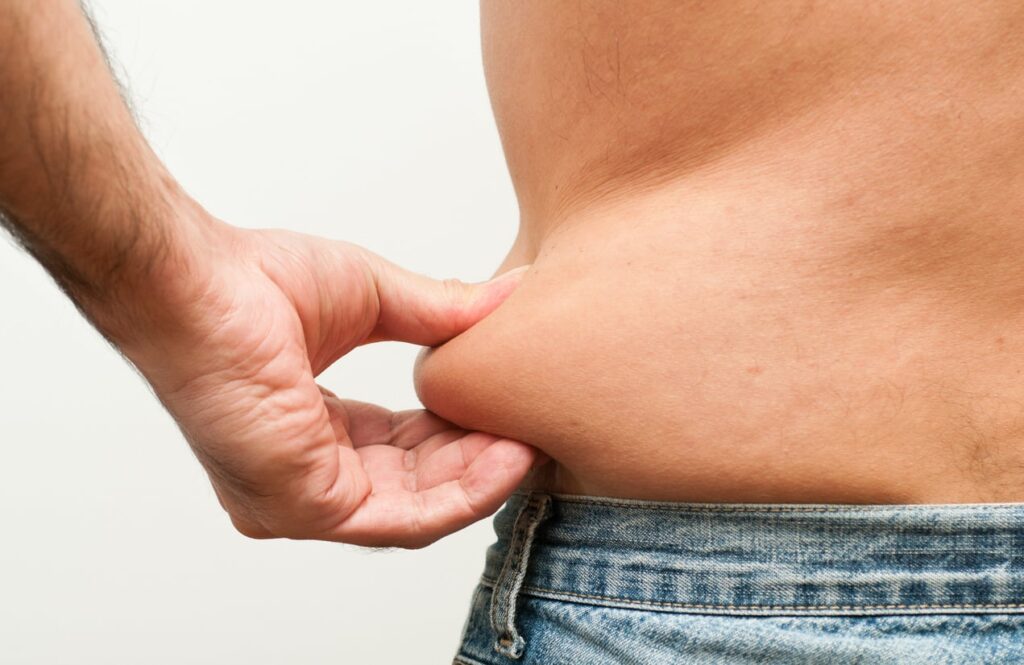
The surgeon will also look at how the fat is distributed. Superficial fullness, deeper fullness, asymmetry, prior scars, and body frame all shape what is possible. They may pinch the tissue, assess skin recoil, note areas of firmness from prior surgery, and evaluate whether the problem is actually fat, loose skin, muscle laxity, or a combination.
This is one of the moments when expectations get refined. Patients sometimes come in wanting one area treated, then learn that neighboring areas affect the final look. For example, liposuction of the abdomen alone may leave the flanks relatively full, which can blunt the waistline result. Treating the submental area under the chin may improve profile contour, but if there is significant skin laxity in the neck, liposuction alone may not deliver the sharper jawline the patient has in mind.
Photos are usually part of the process
Many practices take clinical photographs at the first appointment. That can feel awkward at first, but it serves an important purpose. Photos document your starting point and help the surgeon analyze proportions, asymmetries, and contour transitions more carefully than a quick mirror glance allows.
Later, those images become useful for planning and for comparing results after surgery. In my experience, patients often forget the exact details of their preoperative shape once healing begins. Photographs provide a more objective baseline, especially during the early recovery period when swelling can make people second guess progress.
A professional office will handle this respectfully and with clear privacy policies. You should always feel comfortable asking how images are stored, who can access them, and whether they are ever used for education or marketing.
This is where candidacy gets sorted out
Not everyone who wants liposuction is a good candidate for liposuction, and hearing that at the first appointment can be frustrating. Still, it is better than hearing an overly optimistic yes from someone more interested in booking a case than in delivering a good result.
A strong candidate is usually in reasonably good health, close to a stable goal weight, bothered by localized fat deposits, and realistic about the limits of surgery. Skin elasticity matters. So does lifestyle. Patients who already eat fairly well and stay active often get the most satisfying contour improvements because the procedure is refining their shape, not trying to overcome ongoing large weight fluctuations.
A poor candidate may be someone seeking major weight loss, someone with significant untreated medical issues, someone who cannot stop nicotine, or someone expecting perfect symmetry or a model body from a single procedure. Liposuction can improve contour, but it cannot change bone structure, erase every roll in every position, or stop the natural aging process.
Sometimes the surgeon may tell you that another procedure would suit you better. A patient focused on loose abdominal skin may be steered toward abdominoplasty. Someone with weak chin projection may need more than submental liposuction to achieve a stronger profile. Those recommendations can actually save time, money, and disappointment.
You will likely hear a discussion about technique, but results matter more than buzzwords
Patients often arrive having read about tumescent liposuction, power assisted liposuction, ultrasound assisted systems, laser devices, and branded technologies. It is fine to ask about these, and most surgeons will explain what they use. Still, the most important issue is not whether the technique has a catchy name. It is whether the surgeon uses an approach that is safe, appropriate for your anatomy, and likely to produce smooth, proportional contouring.
During the consultation, the surgeon may explain how the area is infiltrated with fluid, where small incisions are typically placed, whether the procedure is done under local anesthesia, sedation, or general anesthesia, and how much fat can reasonably be removed. If you are hoping for a very dramatic reduction, expect a frank conversation about safety limits and realistic outcomes.
That safety discussion is especially important because internet before and after photos can create distorted expectations. A waistline that looks dramatically changed in a photo may reflect more than simple fat removal. It may involve posture, lighting, compression garments, swelling resolution, concurrent procedures, or a particularly favorable starting anatomy.
The surgeon should explain what liposuction can and cannot fix
One of the best signs of a good first appointment is that you leave with fewer fantasies and better clarity. Clear communication protects patients.
Liposuction can remove excess fat from selected areas and improve shape. It can often make clothing fit better, sharpen transitions, and reduce bulges that resist diet and exercise. It does not tighten severe loose skin. It does not correct significant muscle separation. It is not a cellulite cure. It does not prevent future weight gain. And it does not create perfection.
That honesty is especially important in body areas where contour irregularities are more likely. The outer thighs, inner thighs, arms, and previously treated zones can all require careful judgment. Under correcting can leave you underwhelmed. Over correcting can cause hollowing, waviness, or unnatural transitions. A careful surgeon will talk about balance, not just subtraction.
Recovery is part of the first appointment, because it shapes the decision
Many people focus so much on the result that they forget to ask about the first two weeks afterward. Recovery should be discussed in concrete terms.
You can expect swelling, soreness, drainage from the small incision sites in the early period, and bruising to varying degrees. Compression garments are commonly recommended. Most patients describe the first several days as more uncomfortable than sharply painful, though experiences vary by treatment area and volume removed. Returning to desk work may happen in a matter of days for some, while physically demanding jobs may require more time.
Swelling deserves special emphasis because it can be persistent. People often imagine a quick reveal. In reality, contour changes unfold over weeks and months. Early improvement can be visible, but final refinement takes patience. The first appointment is the right time to ask when you can work, exercise, travel, sleep on your side or stomach, and attend social events without feeling self conscious.
This is also when the office may review the practical side of recovery at home. You may need someone to drive you, help you settle in after surgery, and stay with you depending on the anesthesia plan. If you have young children, a physically demanding routine, or a major event coming up, scheduling matters.
Cost usually comes up, and it should be transparent
Most cosmetic liposuction is an out of pocket expense, so cost is part of the decision from day one. The exact price varies widely depending on how many areas are treated, the complexity of the case, the surgeon’s experience, geographic market, facility fees, anesthesia, and whether other procedures are combined.
At the first appointment, a well run practice usually gives a written quote or at least a structured estimate. You should understand what is included. Sometimes the number covers the surgeon’s fee, operating room or facility fee, anesthesia, routine follow ups, and garments. Sometimes those are broken out separately.
If you are comparing practices in Michigan, be careful about assuming lower cost means better value. Very low pricing can reflect shortcuts in staffing, follow up, setting, or case selection. On the other hand, the highest price is not automatically the best outcome either. The real value is thoughtful assessment, safe planning, clear communication, and consistently sound results.
Questions worth asking before you leave
The first appointment should leave room for your questions. Patients often freeze up in the room and remember their concerns only in the car afterward, so it helps to jot them down ahead of time. The strongest questions are practical, not performative.
Here are a few that genuinely help:
- Am I a good candidate for liposuction alone, or would another procedure address my concern better?
- What result is realistic for my body, not an idealized example?
- Where will the incisions likely be, and how noticeable are they usually?
- What is the expected downtime for my work and routine?
- What complications do you watch for most often in cases like mine?
Notice that none of those questions are designed to impress anyone. They are meant to help you make a grounded decision.
Red flags you should not ignore
Most patients can sense when a consultation feels professional and when it feels rushed. Trust that instinct. If the first appointment leaves you feeling pressured, confused, or oddly dismissed, take that seriously.
A few warning signs stand out:
- Promises of perfect or guaranteed results
- Minimal discussion of risks, recovery, or alternatives
- Pressure to book quickly or put down a deposit on the spot
- Vague pricing that changes when you ask for details
- Little interest in your medical history or overall health
An ethical surgeon understands that cosmetic surgery requires informed consent, not momentum. You should feel educated, not cornered.
Why the Michigan setting can shape the discussion
When people search for Liposuction Michigan, they are often comparing more than surgeons. They are also thinking about logistics. Weather, driving distance, and seasonal routines can matter more than patients expect. Recovering during an icy winter week in Michigan is different from recovering in mild weather. Compression garments layered under work clothes in summer can feel different than in colder months. Travel from northern or rural areas may affect how easily you can attend follow ups.
Those details are not trivial. A patient who lives two hours away may need a different scheduling plan than someone ten minutes from the office. Someone hoping to recover discreetly during a slower winter work period may plan differently than a teacher or parent tied to a school year calendar. Good practices account for real life, not just the operating schedule.
You may leave with either a date or a decision to think
Not everyone books surgery after the first appointment. Some do, especially if they have been researching for a long time and feel aligned with the surgeon’s recommendation. Others go home to reflect, compare consultations, or sort out timing and finances. Both approaches are normal.
If the consultation goes well, you may receive preoperative instructions before you even choose a surgery date. These often cover lab work if needed, medication adjustments, nicotine cessation, what to wear on surgery day, fasting instructions if anesthesia is involved, and when to stop certain supplements. Even if you wait to schedule, those instructions give a clear picture of what moving forward would involve.
There is real value in sitting with the information for a few days. Cosmetic surgery is elective. That means you have the luxury, and the responsibility, to decide without urgency. The right practice will respect that.
What most patients feel after a good consultation
After many first appointments, patients expect to feel either fully certain or fully discouraged. More often, they feel something better: informed. They understand whether liposuction fits their goals, what trade offs come with it, and what results are realistic on their body rather than on a stranger in a photo.
That clarity is the real purpose of the first visit. A strong consultation does not sell you an ideal. It translates a wish into a medically grounded plan, or tells you honestly when no such plan exists. For anyone considering Liposuction Michigan options, that kind of appointment is worth far more than polished marketing or dramatic before and after galleries.
If you walk out knowing what can improve, what probably will not, how recovery would look, and whether you trust the person giving the advice, then the consultation did its job. That is what should happen at your first appointment, and it is the standard you should expect.
Aesthetic Plastic Surgery & Laser Center, Michelle Hardaway M.D.
27920 Orchard Lake Rd, Farmington Hills, MI 48334, United States
+1 248-221-1957
FAQ About Liposuction Michigan
Is 55 too old for liposuction?
Age 55 alone does not determine suitability. A surgeon evaluates overall health, skin quality, healing risks, and realistic goals. A personal consultation is needed to assess candidacy and discuss alternatives.
What happens 10 years after liposuction?
Contour improvements can last, especially with stable weight. Aging, pregnancy, and weight changes can alter the appearance over time. Results vary, and liposuction does not prevent future body changes.
Can lipo get rid of an apron belly?
Liposuction reduces localized fat but does not remove hanging excess skin. An apron belly may require assessment for a skin-removal procedure instead of, or alongside, fat removal. A qualified plastic surgeon can explain appropriate options and their risks.